
Cash Management: How to Save Money and Reduce Risk with Professional Services
How to save with professional cash management: cash-in-transit, valuables logistics and faster reconciliation. Steps and comparison table.Cash management isn't just about counting banknotes: it's the complete system for collecting, safeguarding, transporting, processing and reconciling physical money securely and with full traceability. In companies with multiple sites, stores or shifts, the real cost usually lies in what isn't visible: staff hours, bank trips, discrepancies, lack of visibility and risk in handling and transporting funds.
That's why more and more organizations are professionalizing their cash management with specialized services for cash collection, cash in transit (CIT), cash processing and point-of-sale automation.
In this guide you'll learn how to spot the main cost leaks, which levers drive operational savings and which criteria to use to choose a combination of services that scales with your business.
What is cash management and why does it cost more than it seems
Cash management is the organization of the complete cash cycle —from the moment it enters the till until it's deposited and reconciled— to improve security, availability, efficiency and control.
In operational terms, it usually includes:
- Cash collection at stores, operational centers or collection points.
- Cash-in-transit transport via cash in transit (CIT), with protocols and traceability.
Cash processing: counting, verification, sorting, deposit preparation and reporting.
Custody and transport of valuables (as needed) and reconciliation for a frictionless close.
In practice, cash management applied to physical cash means minimizing the total cost of operating with banknotes and coins without compromising security or continuity: less handling, more control and faster deposit times.
Mini diagnostic (2 minutes): is there hidden cost in your cash management?
Answer "yes" or "no":
→ Does your team spend more than 30 minutes a day on closing, reconciling or preparing deposits?
→ Are there daily or weekly bank trips from stores or centers?
→ Are there recurring discrepancies, incidents or "unexplained loss"?
→ Is there a lack of traceability (who, when, how much) or unified reporting?
→ Is your operation growing across sites or seasons, and the current process isn't scaling?
If you answer "yes" to 2 or more, there is usually tangible savings to be had by professionalizing management (and, above all, by standardizing processes and reducing handling).
Where the money goes: 7 typical leaks in companies that handle cash
In real operations, leaks appear in layers. Here are the most common:
Staff time
Every minute spent on closes, manual counts, bag preparation or resolving incidents is time not spent selling, operating or serving customers.
Typical sign: long closes or ones that depend on "the person who knows how".
Bank trips
When internal staff handle the transfer, hours, logistics and exposure to incidents all add up. In addition, if a deposit can't be made on a given day, cash builds up and risk increases.
Errors and discrepancies
A discrepancy isn't just money: it also means investigation, friction with the team, rework and harder audits.
Operational and reputational risk in transport
Any incident in custody or transfer affects continuity and reputation. That's why professional valuables logistics and cash-in-transit rely on protocols, route planning, traceability and security measures.
Idle cash
The longer cash takes to be deposited: the more idle cash on hand, the less visibility and the less accurate treasury decisions become.
Change (coins/notes) management as "micro-chaos"
Requesting, storing, distributing and controlling change without a standardized system becomes repetitive, error-prone and hard to audit.
Lack of visibility and slow reconciliation
Without consistent, traceable data, you get distrust from Finance toward stores, closes take longer and decisions are made with partial information.
How you save with Loomis: operational levers
The key isn't "doing the same thing more cheaply", but redesigning the flow so cash passes through fewer hands, moves more securely, can be recorded with traceability and is reconciled with fewer internal hours.
Loomis can cover the value chain with a modular approach: Cash-in-Transit (CIT), Cash Management and automation with SafePoint, among others.
Operational capacity: a network in Spain with +400 armored vehicles and +4,000 clients, providing scale and reliability.
Request an operational assessment: identify cost leaks by site and shift.
1) Cash collection + cash-in-transit (CIT)
CIT (cash in transit) is the secure cash/valuables collection and transfer service, with protocols, traceability and coverage.
Savings it typically unlocks:
- Reduces or eliminates bank trips
- Lowers risk exposure
- Standardizes schedules and routes
- Frees up the responsible staff's time.
Good practices that tend to work:
- Define collection windows by criticality (not every site needs the same)
- Standardize packaging/bags and chain of custody
- Agree on a contingency plan for seasonal peaks or special operations.

2) End-to-end cash management (collection + processing + reconciliation)
Cash processing is the counting/verification/sorting done to prepare the deposit and generate consistent reporting.
Where the savings show up:
- Fewer discrepancies (and less time spent investigating)
- Faster reconciliation
- Stronger control for auditing.
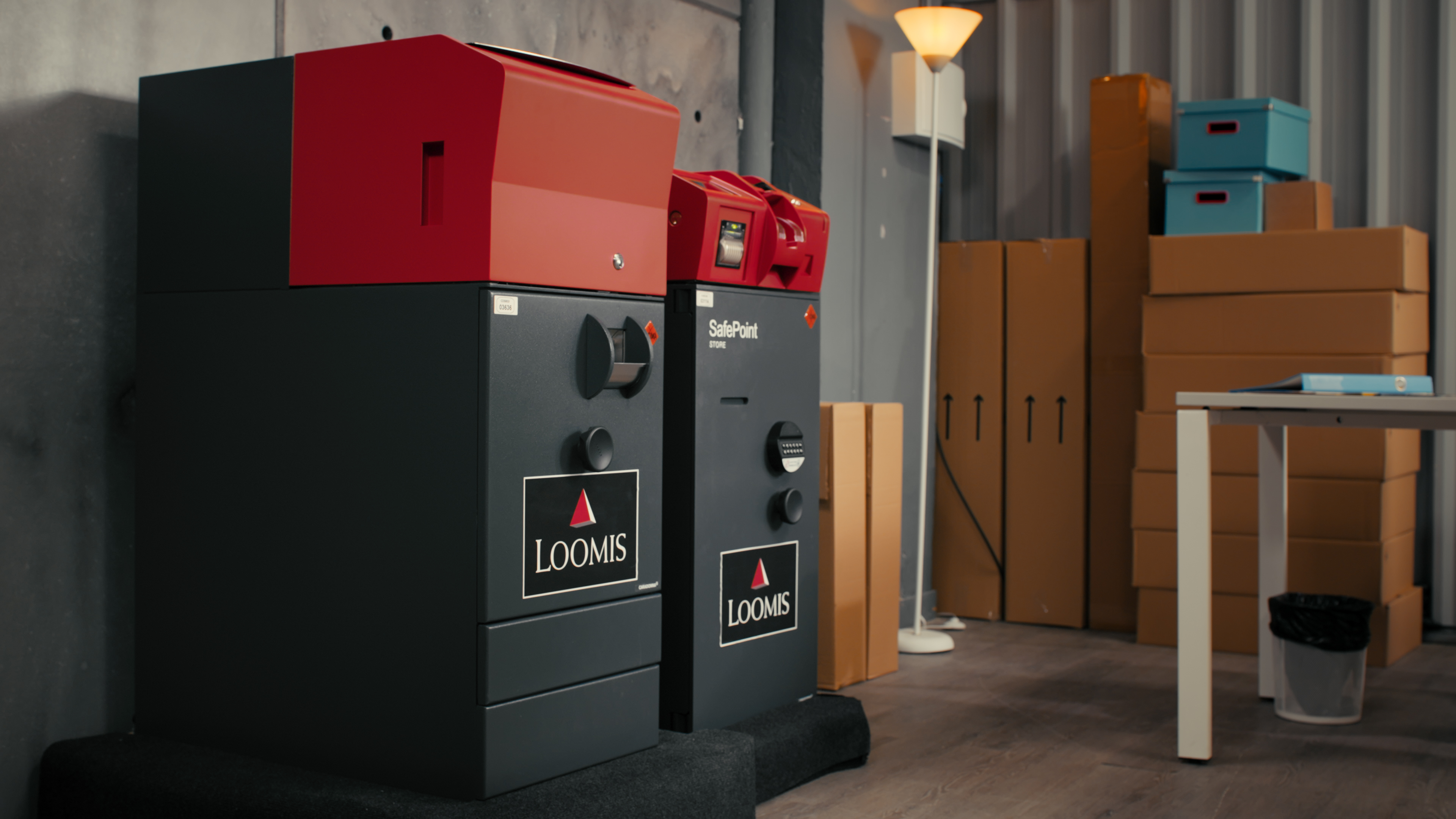
3) SafePoint (smart safes) to automate the point of sale
In many operations, the biggest "leak" is in-store: multiple tills, shifts, staff changes and end-of-day deposits.
The goal of a smart safe is for cash to be deposited and recorded with traceability, reducing handling and improving control.
Expected operational benefits (depending on the case):
- More consistent closes (less variability by person/shift)
- Better reporting and reconciliation
- Lower exposure from accumulation and handling.
Important: the impact depends on the process. What matters is measuring before/after with KPIs (closing time, incidents, time to deposit).
4) ATM (if applicable): outsourcing and optimizing ATMs
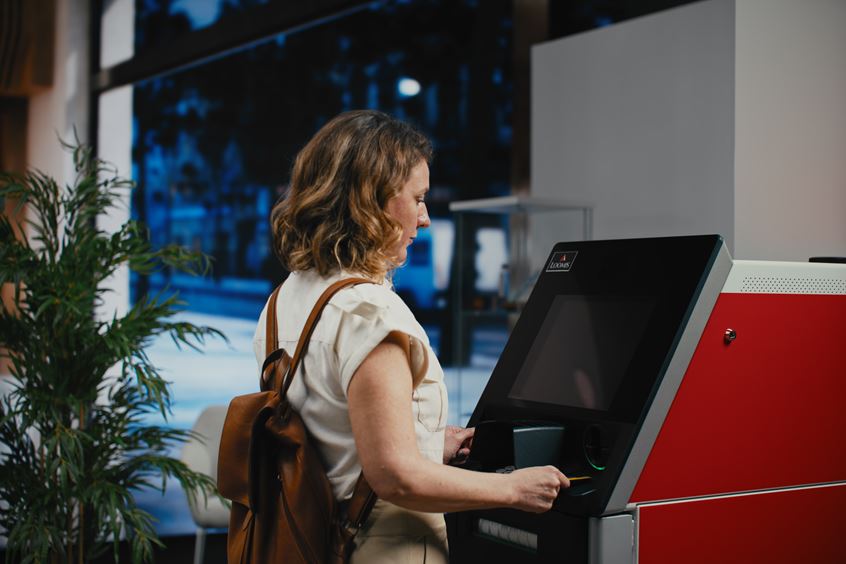
If your organization manages ATMs or related services, a comprehensive approach can help optimize cash loads, coordinate providers and improve operational efficiency.
Comparison table: in-house management vs. outsourcing vs. automation
| Approach | What it optimizes best | Typical limitations | When it fits |
| In-house management
| Direct control with low complexity
| More internal hours, more risk in transfers, hard to scale
| 1–2 sites, low volume, infrequent deposits
|
| CIT / cash-in-transit
| Security and regularity of money in transit
| If in-store processes aren't improved, discrepancies may persist
| Multi-site, frequent deposits, security needs
|
| CIT + SafePoint
| Less handling, more traceability and control
| Requires discipline and adoption
| Retail/leisure/service stations, shifts, multiple tills
|
| End-to-end (includes processing)
| Stronger financial close and fewer incidents
| Requires defining reporting and SLA
| Large companies, demanding audits, high volume
|
Decision criteria: how to choose the right combination
To decide quickly, evaluate these variables:
Operational complexity
Number of locations:
1–2: in-house standardization or occasional CIT may be enough.
3–20: CIT usually makes sense; SafePoint starts adding control.
20+: modularity + central reporting is usually key.
Number of tills/shifts per site
The more shifts, the higher the likelihood of incidents → prioritize automation and traceability.
Frequency of deposits and bank trips
If there are daily or weekly trips, the hidden cost (time + risk) is usually significant. With seasonal peaks, you'll need capacity and an SLA.
Security and compliance
Require, at minimum: security protocols, traceability, contingency plans and clear contractual terms (including coverage).
Main objective (pick one to start)
- Reduce internal hours (productivity),
- Reduce discrepancies (control),
- Speed up deposits (liquidity),
- Reduce risk (continuity).
Modularity and scaling
Start with the biggest pain point (e.g., CIT), add automation or processing based on KPIs, and scale by region.
Quality and standardization
If your company requires it, consider certifications and auditable processes (for example, ISO 9001:2015, based on available information).